Thursday, March 3, 2011

Burying the Hatchet by Chris Well

What a delightful mystery! This is the first novel by Chris Well I have read – I will certainly read more. The two main characters are older, so the story is definitely aimed at “seniors.” The plot and snappy dialogue, however, would be found rewarding to any mystery lover.

Several senior citizens have recently died. Officials initially think the deaths are natural until a “psychic” convinces them to re-investigate the cases. Autopsies show the people have been murdered, smothered, and the sheriff is looking for a serial killer.
A local pastor denounces the psychic and when the two are scheduled to meet for an attempt at reconciliation (“bury the hatchet”), the psychic is found murdered. Hundreds of witnesses to the well publicized meeting are convinced the pastor and psychic were the only ones in the room at the time of the murder.
The pastor is arrested even as he declares his innocence. He was alone in the meeting room, he asserts, as he waited for the psychic. Yet moments later, as the pastor is leaving the building, the psychic is discovered in that room, very dead.
Earl Walker has been a bitter old man, wheelchair bound. He has recently been attending the pastor's church, however, and taking the membership class. He is convinced the pastor is innocent and with his friend Gloria, sets out to prove it. It soon becomes evident that the only way they can do that is to uncover the real murder.
Well has created a fine plot – a murder in an apparently “locked” room. Earl and Gloria are prodded by a college age friend to consult classic mystery novels to see how such a crime could be committed.
Well also has some great dialogue. Experiencing Earl contemplating and then trying to propose to Gloria is a humorous aspect of the novel. And the deputy sheriff is a riot.
This was a very rewarding mystery. It is part of “The Hometown Mystery” series from Barbour Publishing and is a sequel to Nursing a Grudge. One does not have to read that one first, however, as Well covers the information from the earlier book nicely.
Barbour Publishing, 256 pages.

This book was provided for review in an egalley form by Barbour Publishing for the purpose of this review.

Publisher information.

Monday, February 28, 2011

Has Christianity Failed You? by Ravi Zacharias

Many Christians struggle in their faith and some find that their faith has failed them. Zacharias' desire for those is that, “...as they read this, God will rekindle that flickering light and bring new life where there seems none.” (9)

The author's argument is to have readers look at life without Christianity and what that means. While his premise sounds good, his methods left me unsatisfied. He tells many stories (many of which had me scratching my head as to their relevance). He spends many pages in a critique of Robert Price's The Reason Driven Life (which I had never heard of). He takes great care to have the reader address the issues of thinking Jesus has failed the believer when it was really the church which has done so. He has some seven pages on the possibility of thinking Christianity has failed one because the sexual standards it imposes are difficult to meet. (91-98)
He reminds readers of the good arguments for the existence of God. He covers the possibility of those who think Christianity has failed them because of unanswered prayer. He says, ...prayer remains a mystery to all of us...” (152) Zacharias reminds his readers, “...prayer is about – training one's hungers and longing to correspond with God's will for us – and that is what Christian faith is all about.” (157)
He wants his readers to realize, “...who Jesus is and what it means to be a Christian. … You have realized that Christianity has not failed you; God has not failed you. … Perhaps your expectations of Jesus and Christianity were false.” (179)
It may be that the church has failed you. Zacharias spends some time taking the church to task. While many churches are “demonstrating theological integrity and methodological relevance,” (185) there are all too many who have lost or compromised the message. They are not teaching people how to think correctly. (189)
“If you have struggled with your faith, if you feel that Christianity has failed you, take a deep, personal look at what you are called to as a Christian, according to the Scriptures, and then evaluate once again who has failed.” (202) Giving up on Christianity “...makes all the difference in the world for you and how you life your life...” (207) “It is Christianity that has kept the Western world intact, that has created the environment and the impetus for success the West has known.” (208) Zacharias says, “In any situation when Christianity is evicted, I have absolutely no doubt that a radical form of totalitarian religious belief will take over.” (208) He suggests the reader look at Jesus and trust God to carry you through the struggles to a place of contentment and victory. The alternative is a “freedomless worldview that imposes its belief on all.” (209)
Others have traveled the same road and found their way back to a joyful relationship with God. There may be questions that still haunt you but Jesus Christ will carry you to the solid ground of truth and hope. (210)
I have read many of Zacharias' books and this one has been the least rewarding. Unlike his other books. I found this one very hard to follow. Now that I have finished it, I am not so sure that there are really a couple of books in this one. Too many arguments have been crammed into 210 pages. Too many stories were included. (Such as the one about his daughter's answered prayer regarding a lost suitcase – is that really supposed to make people feel better when their prayers for the life of another were not answered positively?)
I don't feel this book is for the general public. One would need to be willing to wade through much to catch the kernels of relevant material.
 

Zondervan, 210 pages.

Saturday, February 26, 2011

Jesus in the Present Tense by Warren Wiersbe

Wiersbe meditates on the “I Am” statements of Jesus. “[Jesus] is alive this very moment and offers us a satisfying spiritual life in the present tense.” (11) Our past may discourage us and the future may frighten us, but life in the present can be enriching and encouraging because Christ lives in us. (Gal. 2:20)
God revealed Himself to Moses as “I Am.” “The name conveys the concept of absolute being.” (20) Jesus made the same kind of statements. “In His I AM statements, Jesus not only tells us who He is, but He also tells us what He can do for us and what we can become through Him.” (25)
To the spiritually hungry, He is the Bread. To those in spiritual darkness, He is the Light. To those seeking entrance into the security of life in God's flock, He is the Door. He is the protecting and leading Shepherd. For those desiring to bear fruit, He is the Vine inviting us into union with Him. Readers are encouraged to trust in the I AM to be our sustenance when spiritually hungry and our light when in spiritual darkness.
Wiersbe draws on his decades of experience as a pastor and teacher to encourage readers to live in the present tense. “When we live in the present tense, we live by faith and are able to welcome each day from God's hand, knowing that He always plans the best for us.” (178) Expect each new day to be an adventure in faith. Abide in Jesus, the I AM.
The only aspect of the book I did not like was Wiersbe's speculation that Jesus quoted all of Psalm 22 (while on the cross), “even though His voice was unheard by the spectators.” (153) Nonetheless, this is a good book for devotional reading.

I received a copy of this book from The B & B Media Group, Inc., on behalf of the publisher, David C. Cook, for the purpose of this review.

David C. Cook, 188 pages.  Publisher information.

Friday, February 25, 2011

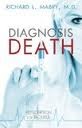
Diagnosis Death by Richard Mabry

The third and final book in the Prescription for Trouble series picks up where Code Blue left off. Cathy is pregnant and her doctor has recommended she needs to take time away from her practice for rest. Cathy welcomes Dr. Elena Gardner but soon finds that there are unanswered questions in Elena's past. Who pulled the life support when Elena's husband was in a coma? Elena cannot remember her actions during that time. And what about the patient who died under similar circumstances while under her care?
Cathy's husband Will sets out to help Elena find the truth about the suspicious deaths. But she has other troubles: midnight phones calls threatening her, a peeping Tom frightening her and a deputy sheriff that will not leave her alone.
As with the others in the series, Mabry has done a fine job creating a medical thriller.  While he clears up most of the loose ends, I felt the deputy sheriff's obsession with Elena was left unresolved. 

This book releases in April, 2011. I read an advanced reading egalley provided by the publisher, Abingdon Press, for the purpose of this review.

Abingdon Press, 288 pages.

God's Guest List by Debbie Macomber

We often fail to recognize the gifts God is giving us. These unrecognized gifts are not nicely gift-wrapped. In fact, frequently they are people shaped.

After God's prodding, Debbie made a guest list, empty lines to see who God would bring her way. She expected the list to fill with names of people who had changed her or would do so in the future. (6) She knew it would take a lifetime to fill that list.
As she began to place names on the list she came to appreciate people in a whole new way. Her sense of anticipation heightened at the possibility of meeting new people.
Debbie shares what she has learned. She tells stories of people who have impacted her and opportunities she missed in being the friend another needed. She knows that God brings some by to increase joy. Others come into our lives to cause us to remember to keep things in perspective, offering “us the gift of a fresh opportunity to develop patience.” (63)
Debbie says the purpose of her book “is to help us identify and welcome those special people God sends into our lives” and realize that God will “have us on the guest list for others' lives.” (11) She has shared her experiences so others can see how God works. She wants her readers to begin to look for God's fingerprints in their lives.
I have to admit, some of the vignettes seemed rather meaningless to the overarching purpose of the book. Nonetheless, it was a very rewarding and I felt I got to know Debbie a little better. She has provided some great ideas for the role of being guests in other peoples' lives. She also has an invitation to salvation at the very end.

Howard Books, 188 pages.

A Billion Reasons Why by Kristin Billerbeck

Katie is an accomplished teacher of students with special needs, most of them on the severe end of the autism spectrum. Her life is under control. She is almost engaged to Dexter, a very practical man. She really didn't love him. But, “Love was a decision. A choice. All the leading experts said so, and she'd decided she would love Dexter in a way that honored and respected him.” (61)
One day, without warning, her high school flame appears at her classroom door. They have a past and a relationship that ended abruptly. It had been eight years. And now, there he was.
Luc has come to ask Katie to sing at his brother's wedding. His real goal, however, is to save Katie from a dull marriage, one where she could not possibly be her true self. He is convinced she is headed towards a “lifeless future.” (63)
Along with Luc comes all the hurt from those years ago. There were actions that Luc had done right before Katie's father suddenly died that caused pain for Katie's mother. Luc has secrets he feels he must keep or Katie would be hurt even more.
Katie faces a dilemma. She is committed to Dexter. But she really is still in love with Luc, even after all those years. Should she pursue what Luc says would be a “loveless practical marriage”? Or should she follow her passionate heart?
Can all of the issues that separate Katie and Luc ever be resolved? Does God want her to have her heart filled with love? The passions of her youth led to mistakes. Can she trust herself to follow her passions now?
Billerbeck has written over 30 novels and this is another good one. It is definitely a book for women who like romance stories with the grounding of God's will in the forefront. The action takes place in New Orleans and it was fun to learn about “society” in that city.

A copy of this book was provided by The B & B Media Group, Inc., on behalf of the publishers for the purpose of this review.

Thomas Nelson/February 2011/ISBN: 978-1-59554-791-0/320 pages/softcover/$14.99

http://www.thomasnelson.com/ ~ http://www.kristinbillerbeck.com/ 

Thursday, February 24, 2011

Why God Won't Go Away by Alister McGrath

Recently the rise of New Atheism has changed the long time relationship of atheism and religion existing side by side. Since 9/11 atheists have been arguing that religion is irrational and dangerous. Many bestsellers have been written in the last decade promoting an aggressive form of atheism. While the “old atheism” had a sense of “let's exist side by side,” the New Atheism has an intense anger against religion, which is held to poison everything. (31)
Yet belief in God will just not go away! “Numerically, far more people believe in God today than ever did in the past.” (86) It is a dilema to atheists (who comprise about four percent of Americans, a 2007 survey found). (36)
McGrath addresses the arguments promoted in the works of Richard Dawkins, Daniel Dennett, Sam Harris and Christopher Hitchens. He reviews their popular works, revealing their faults.
Harris set the tone and ridiculed religion. Dawkins added a more aggressive critique, declaring faith to be fundamentally irrational. Of Dawkins McGrath says, “It's easy to argue that atheism is better than Christianity: you only need to ignore the good side of christianity and the bad side of atheism...” (14) Dennett tried to offer evidence that would destroy faith. Hitchens added his passionate anger toward religion.
McGrath addresses in detail the arguments of the New Atheists. The three core themes of New Atheism include its critique of religious violence, its appeals to reason and to science as the foundations of rational belief.
The author reminds his readers of the heritage of the Soviet Union, “the world's first officially atheistic state.” (65) Accountability to no higher authority than the secular state resulted in violence. New Atheists ignore or try to explain away the atrocities.
McGrath takes the atheists' arguments to their (unintended) end. If there is no God, we have no one to blame for human evil except ourselves. (81) The result is that “humanity appears to be rather less rational and moral than the New Atheist worldview allows.” (84)
The author also addresses science and the fact that science doesn't “prove” anything. Science deals in probabilities. “We can give ... good answers that we believe can be justified from the best evidence at our disposal. But we can't give a final answer because we know that what scientists believe today may not be what scientists believe in the future.” (101) Science is so successful because “it's willing to change its mind in response to new evidence.” (102) (As a scientist, with a BS in physics, I heartily agree with McGrath regarding science. Finally, a philosopher who understands what science can and can't do.)
It would seem, says McGrath, that religion is a characteristic of human nature. It is not going away.
The author knows atheism, having grown up atheist in Northern Ireland in the 1960s. Now he is convinced Christianity makes more sense.
McGrath has done an excellent job in answering the new Atheists and their arguments. His work is the best I've read on the subject to date. It is short and concise and would make a great book to give to your atheist friends. For those who would like to investigate the subject further, McGrath has provided three pages of suggested further reading.

This book is being released May 17, 2011 so mark your calendar to get a copy. I read an advanced reading egalley provided by Thomas Nelson Publishers, for the purpose of this review.

Thomas Nelson Publishers, 132 pages.

Wednesday, February 23, 2011

Original Sin: a Sally Sin Adventure by Beth McMullen

I am a fan of Janet Evanovich and have been looking for another author that is as fun to read.  While Sally Sin is no Stephanie Plum, she does get into crazy adventures.
Earlier in her life Sally was an agent for the USWMD.  Now called Lucy, she is happily married with a three year old son.  Both husband and son know nothing about her espionage years.  Her life gets very complicated when the head of USWMD wants her to help capture a bad guy.  Blackford is an agent turned bad and he has crossed paths with Sally before.  He is supposed to be dead but Sally finds out soon he is all too alive. 
McMullen does a great job of combining the currect action with reflections back to Sally's agent days.  And there is a good deal of humor, too.  People who might find Evanovich a little too risque wil be happy with Sally Sin.  I hope this is just the first of a long running series.
This novel does not release until July 12, 2011, so mark your calendar.  I read an advanced reading copy in an egalley form provided by the publisher, Hyperion, for the purpose of this review.